
Higher exports will also drive up volumes, as the company seeks to avail of the benefits under the government's recently announced production linked incentive scheme.

India will not tailor its policies to suit US EV maker Tesla, and its laws and tariff rules will be formulated to attract all-electric vehicle manufacturers from across the world to set up a base in the world's fastest-growing economy, Commerce and Industry Minister Piyush Goyal said. Tesla has been seeking an initial tariff concession that would allow it to offset 70 per cent customs duty for cars priced less than $40,000, and 100 per cent for cars of higher value.
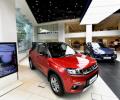
Dealers across brands are slashing prices by Rs 20,000 to over Rs 1 lakh, depending on the car model.

The new tax regime has also been fuelling sale of SUVs, particularly the compact SUVs

Code-named Pelican, bigger hatchback with new petrol and diesel engines may hit the road next year.
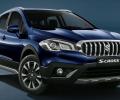
With swanky showrooms and VR-enabled sales platforms Maruti Suzuki, Tata Motors, and Skoda bet on shine and gloss,and place their faith in experiential branding.

Audi India launched the second generation 2016 Audi R8 at the show.

Market leader Maruti Suzuki is putting finishing touches to its plan of finding its feet in what is being hailed as a battle of epic proportions in India's fastest-growing passenger vehicle segment, reports Arindam Majumder.
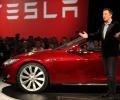
What will it take for Tesla to plug and play in India? Sector pundits say it's a mix of strategy, getting the price right, timing, the right talent, and above all, patience.
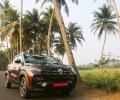
The new Kiger has enough in it to draw you away from the hatchback you've been eyeing.
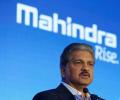
With increased consumer awareness and government support in place, it is the opportune time to enter the electric passenger vehicle segment, Mahindra Group Chairman Anand Mahindra said on Monday. With an eye on gaining leadership in the electric four-wheeler segment, the Indian auto major announced that it will launch five new electric Sports Utility Vehicles (SUVs) for both domestic and international markets, with the first four expected to hit the road between 2024 and 2026. The company would introduce the first of the five e-SUVs towards the end of 2024, starting with the Indian market.

Buying a car, particularly a diesel-powered one, is set to pinch the customers' pockets even more from the next financial year, as the second phase of Bharat Stage VI (BSVI) emission norms kicks in. The rules require cars to be compliant with real driving emission (RDE) norms, which measure pollutants emitted by cars while they are being driven on the road, unlike in a laboratory test. The norms may increase the cost of producing diesel vehicles by nearly Rs 75,000 to Rs 80,000, and petrol-powered ones by Rs 25,000 to Rs 30,000, analysts said.

The new year will see a line of hatchbacks (including compact SUVs) hit the Indian roads. Rajesh Karkera/Rediff.com offers a peek.

Given India's reliance on coal, electric vehicles could at best be 10% more efficient than petrol in terms of CO2 savings.
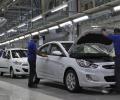
Leading carmakers Maruti Suzuki, Hyundai and Tata Motors reported robust dispatches to dealers in May on the back of strong demand for passenger vehicles across regions, even as the global semiconductor shortage continued to impact production. Mahindra & Mahindra, Kia India, Toyota Kirloskar Motor, Honda Cars and Skoda also witnessed strong demand for their models last month. The month of May also witnessed Tata Motors race ahead of Hyundai in terms of domestic wholesales.

A record number of 85 products will be launched.

Tata Motors, however, will not be able to meet this small demand and keep the Nano alive from October next year, when safety regulations for existing car models kick in.

India's electric mobility goal, which has so far been riding on two wheels, is all set to graduate to four wheels. At least, the journey has begun. Hyundai Motor India said it would invest Rs 4,000 crore till 2028 to launch half-a-dozen electric vehicles (EVs) in India. It would eventually straddle premium and mass segments. The first of these - the electrified version of an internal combustion engine (ICE)-powered model - will go on sale as early as next year.

Whether it is protecting its turf in its core utility vehicle segment through new model launches, or stepping up investment in electric vehicles, the Anand Mahindra-led firm is leaving nothing to chance

Several carmakers, including car market leader Maruti Suzuki India pulled the plug on diesel models citing higher costs for BSVI variants leaving buyers with limited options.

Recently, Suzuki Motor Corp (SMC) in an investor presentation expressed strong intent to enter the electric vehicle (EV) space. This is part of a larger strategy the Hamamatsu-based firm has drawn up in developing electrification of technologies as it seeks to achieve carbon neutrality. The significance of this presentation is that it marked the first time that the Japanese carmaker spelt out its EV strategy with well-defined timelines. SMC plans to develop electrification technologies by 2025, fully implement them in products from the same year, and make a full-scale quantitative increase from 2030.

The challenges of transition to stricter emission norm BS-VI from BS-IV and compliance to new safety norms thereby making vehicles costlier are lurking around the sector.

According to research by IHS Markit, for an ecosystem still grappling with infrastructure issues -- the high cost of EVs and a greater OEM (original equipment manufacturer) focus on electrifying two-wheelers and commercial vehicles first -- the share of such vehicles is expected to be 4 per cent by 2030, reports Pavan Lall.
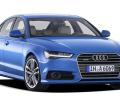
From Alto to Audi, get car discounts of up to Rs 900,000

Sachin Tendulkar, Virat Kohli, Katrina Kaif, Ranbir Kapoor and Alia Bhat all turned up at the 13th edition of the gala car fair.

Markets ended higher for the second straight session mainly on the back of upbeat corporate earnings.
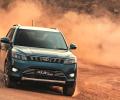
The XUV300, Mahindra's second compact SUV, is so packed with segment-firsts that it is sure to send shockwaves among competitors.

Over 22 passenger and commercial vehicle makers and 18 two- and three-wheeler makers will take part amid proximate security.
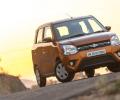
Can a stronger platform, an all-new design, a more powerful engine and an extended feature list make the third-gen WagonR a better car than its rivals? Let's find out
